
I’ve had several friends approach me and tell me that they really really want to travel, but they have no clue how. As far as I can understand, they’re simply overwhelmed with choices and unknowns and don’t know where to start. This is for them. Here’s my newbie guide for planning an international trip:
Step One: Pick a Destination. Seriously. Any destination will do. I think some people might get caught up thinking that there’s a way to pick the wrong destination. There’s really not. Every place is cool to visit and every season is interesting to experience. Here are a few things to consider when looking at a destination:
Safety. Some places are safer to visit than others. I’ve visited plenty of places that are considered less-safe, but I’ve never visited a place that I regretted visiting. I do avoid countries that are in the middle of war, but other than that, I do sometimes visit places that it’s not recommended Americans visit. The US State Department puts out travel advisories, so if you’re questioning the safety of a place you’re considering visiting, you can look to see if the US government has any recommendations/warnings related to the destination you’re considering. I’d say if you’re new to travel and are worried about safety, starting out with a country that has no warnings from the State Department is a good way to go.
Price. Some places are more expensive to visit than others, and it is important to factor in what destinations will fit your budget, considering exchange rate, airfare, lodging, food, transportation, safety, and activities. To figure this out, the internet is your friend. You can research hotel prices, or google, “cheap places to travel,” and look up exchange rates online to get a better idea of cost.
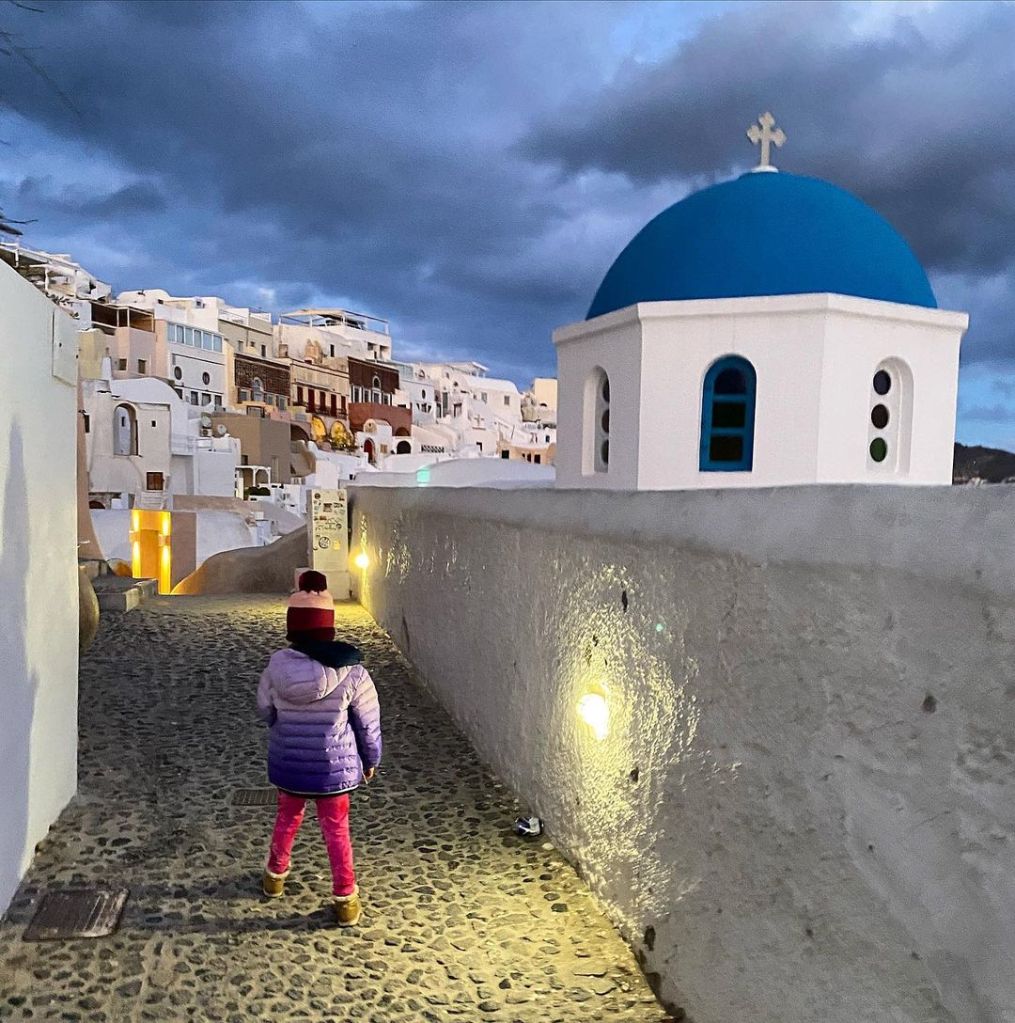
Season. For any destination, there are better times to visit weather-wise, but visiting in the off-season can be really cool for it’s own reasons. For example, in 2021, we went to Greece for Christmas. One of the most famous areas in Greece is Oia in Santorini. Oia is the picturesque island town with the blue and white homes on the cliffs; quintessential Greek Island. It’s got adorable cobblestone streets. During the summer, those streets are covered with tourists, and it’s hard to get food at a restaurant without reservations made weeks in advance. In the winter, the streets were quiet. The downside to this was that most restaurants and many shops were closed. We ate at least one meal a day at Vitrin, a crepe and sandwich spot because it was the only restaurant that was reliably open. Oia has a famous bookshop that we didn’t get to see because it was closed the whole time we were there. The upside to being there in the off-season was that we got to experience the town crowd-free. We went to the beach and swam completely by ourselves. We got great sunset views at the castle without needing to get there hours early. I got lots of cool pictures with no tourists in them. All of this is just to say: It’s okay to try a place in the off-season. All places are worth visiting during all seasons. Our family prefers to travel during shoulder seasons because typically the prices for hotels are lower and the crowds are less, but we can still get lots of good weather days.
Conclusion: The main thing I want you to take from this is to consider the factors I mentioned above, and then pick a destination knowing that there is no wrong decision. You can have a fabulous time in any destination, I promise!
Step 2: Research Your Destination The next step is to research your destination to give yourself a good idea of what you might like to see and do while you’re on vacation, and to plan ahead for any entry requirements. This is important to do before you leave so that you are sure you’re allowed to enter the country, know where you may want to stay, know whether or not you need to rent a car, and know which airport(s) you may want to fly in or out of.
Figure out Entry Requirements. You’ll want to know if your destination has any health-related entry requirements, and any visa requirements. How to do this? Google, of course! During COVID, I’d typically just search, “COVID restrictions for US citizens entering __________,” which would give me all the information about tests that we’d need to take or documentation we’d need to complete in order to travel where we wanted. For recommended vaccinations, I typically search “CDC travel ____________” and that brings me to the CDC’s website and tells me what vaccinations/treatments I might need to consider when traveling to the country in question.
Finally, to figure out visas, I search “US citizens visa requirements __________.” From there, I scroll down to the US State Department website to make sure I have the official information about visas for the country I want to visit. I have failed to do this in the past, and then had to frantically complete my visa application online while at the airport, as the airline would not let us board the plan until we had proof of visa. Don’t make that mistake!
Find out What Interests You at Your Destination. How to do this? There are many ways! Some people check out travel books from the library and read them. Some watch YouTube videos. I do a little of both of these, but mostly I use Google. I search “Cool things to see in ______” and “cool things to do in ________.” If I see something interesting in my search, I document it in a Word document. Once my interest list is complete, I get on Google Maps to get an idea of where the things I’m interested in are located. If a lot of the things I want to see are in one area, I’ll put that area on my list of “go-to” spots in the county I’m visiting. I’ll also re-arrange my Word doc according to region so that I’ll have an idea of how many activities I’m interested in in each region.
Step 3: Book Your Flights. If you find a really great deal on a flight, go ahead and book it right away. That gives you 24 hours to complete steps 1 and 2, and you can cancel/modify your flight if you realize that you’d rather fly in/out of different airports, or if you need more time because there are so many interesting things to do at your intended destination. More often though I will complete steps 1 & two and THEN book the flight, because if I complete steps 1 & 2, I’ll have a better idea of where I want to fly in/out of, and how long I’ll want in the country I’m visiting.
Step 4: Pick Your Lodging. Once I have my list of places I want to visit, then I can make decisions about which city/cities/towns I want to stay in during my visit. If I have a lot of things I want to see in one city, I’ll stay there for a longer period of time. If I’m visiting a large city, I’ll often simply Google “best neighborhoods to stay when visiting ________.” Usually from there I’ll come up with 2-3 good options and then I’ll book hotels/AirBnBs in the more affordable of the recommended neighborhoods.
I do tend to take a long time picking lodging. I look at prices. I look at reviews. I search on various booking sites. The result is that we often stay in really cool places for relatively low prices. Buuuut, it does take a long time!
A note here: I have not always booked lodging before leaving the US. Experimenting with doing both (booking ahead vs not) I’ve found that if I don’t book lodging ahead of time, I basically end up with two choices: 1) spending time that I could be spending exploring a cool place searching for a hotel, or 2) paying a LOT of money for hotels. Often, it’s actually a combination of both of these things! Thus, I now land solidly in the book-lodging-ahead-of-time category.
Step 5: Book Things that Must Be Booked Ahead of Time. Remember that interest list that I created in step 2? I’m a pretty big fan of using that list for ideas of what to do while I’m traveling. But sometimes there are things that must be booked weeks/months in advance, (for example: things that might sell out) so for those things I do book them while I’m at home. Examples of things that need to be booked ahead of time? Visiting the crown at the Statue of Liberty (must be booked months in advance), Tokyo Disney (they sometimes sell out), Afternoon Tea (I loooooooove going to afternoon tea, but you usually need to book it 2 days in advance. Therefore, I just book it while I’m at home to make sure it’s all taken care of). There are people who like to plan every second of their vacation. I don’t. I have a list of things that interest me, have lodging in place, and then only book the things that I might miss out on if I don’t book in advance.
It’s also at this time that I would book a rental car if we decide that we need one for our trip, and complete any visa paperwork that is needed.
Step 6: GO! Yep, that’s it. After you’ve done steps 1-5 you’re all ready to go! HAVE FUN!
I hope this is somewhat helpful to my wannabe traveler friends!
 Adventure Fam
Leave a comment